
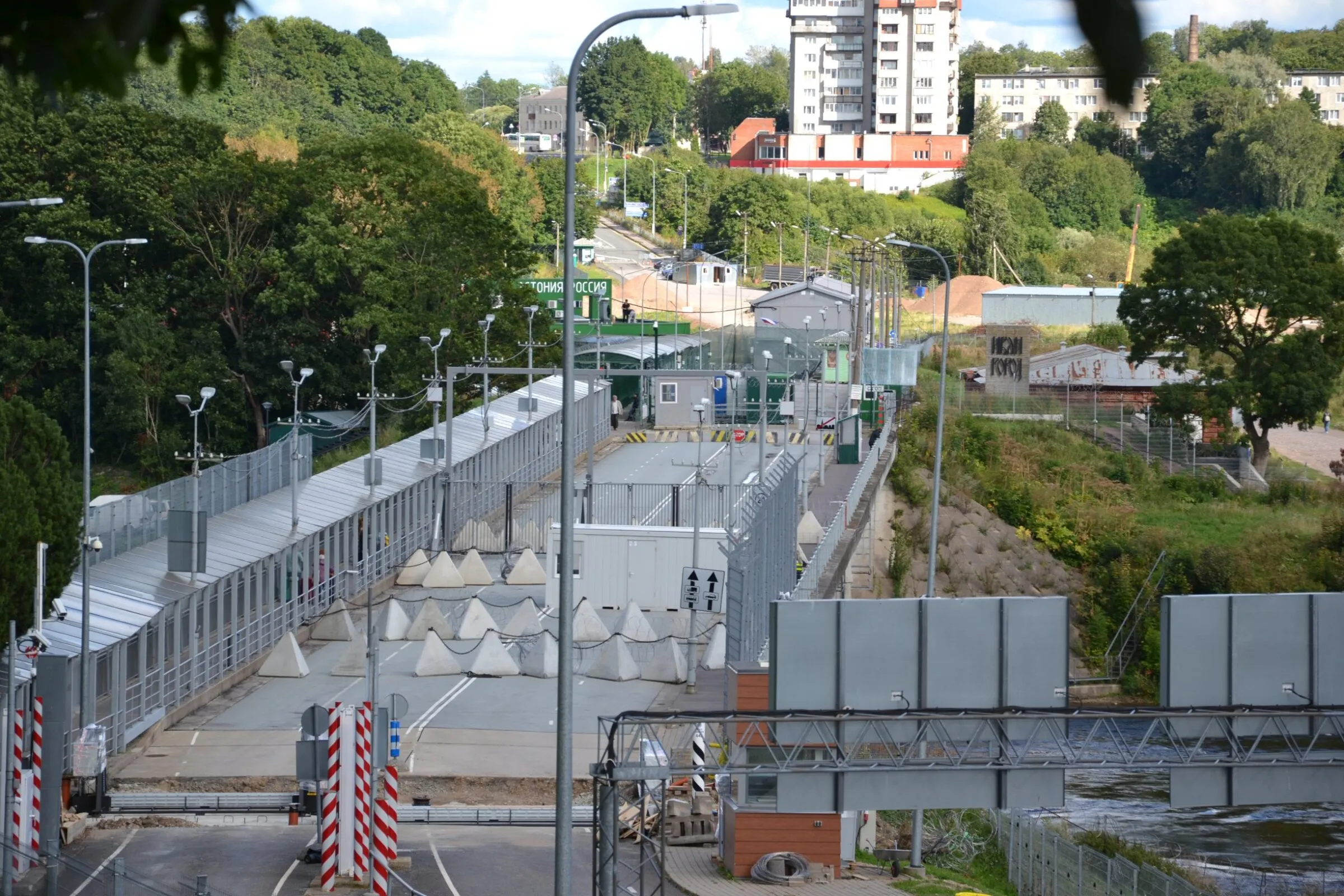
Estonia decided on Friday (20 November) to close all land border crossings with Russia from 1 December, a blunt measure taken in response to a string of alleged sabotage incidents around Europe.
“Russia’s hostile actions have consequences. This is not a response to a single incident, but to Russia’s continued aggression, sabotage and hybrid operations targeting Estonia and Europe,” said the foreign affairs minister https://x.com/TsahknaMargus Tsahkna.
“We are protecting not only Estonia’s security, but also that of the European Union and the Schengen area,” he added.https://x.com/Tsahkna
The move was announced earlier this month, after an alleged arson attempt on a drone manufacturing plant on 14 November.
Prime minister Kristen Michal said the break-in at a facility north of Tallinn was part of what he called Russia’s “wider hybrid war against Europe”. Moscow, predictably, has rejected the allegations as “unsubstantiated” and accused Tallinn of “building a wall” between neighbours.
Estonian authorities say the country’s security service has linked the episode to Russia’s military intelligence agency, the GRU, and have publicly attributed these and other incidents to Moscow.
This was the second attempted attack on an Estonian defence company in several months that Estonian officials have pointed at Russia. But questions remain about motive, evidence and the wider context — and about whether quick public attribution serves security or stokes further escalation.
What happened over the weekend, and why is Estonia responding differently from most European countries?
A coordinated operation, or a convenient narrative?
Early last Saturday, several people smashed windows at Threod Systems in Viimsi, a company that makes long-range strike and reconnaissance drones. Its website lists Ukraine and NATO member states among its customers. The attackers then poured flammable liquids into the building, though a security guard spotted them and called the police.
Estonian officials say the incident was not a chance discovery but a coordinated effort involving Latvian and Estonian services. They report that Latvia’s State Security Service (VDD) tipped off Estonia’s internal security service, KAPO, and that cooperation led to the detention that same night of eight suspects — all Latvian nationals.
Margo Palloson, head of Estonia’s internal security service, said Russia was behind the attempted attack and that the GRU had coordinated the whole operation. “This was another attempt by Russia to carry out sabotage in Estonia,” he said, adding that if the plan had succeeded it “would have caused the company very serious damage”. Palloson also said no one was injured, the company suffered no damage and its production and supply capacities were not disrupted.
Although eight people were detained, only five have been remanded in custody.
Estonian commentators and security officials argue that publishing attributions publicly helps deter further aggression. A local security expert, Henrik Praks of the International Centre for Defence and Security (CDS) in Tallinn, told local media that Estonia prosecutes people who cooperate with foreign intelligence services and publicly attributes attacks where it believes the evidence is sufficient.
Critics — including some in neighbouring countries — warn that rapid public attribution can harden positions and make diplomatic de-escalation harder. Given the tense environment, the speedy finger-pointing at Moscow looks, to some observers, like a policy choice that carries its own risks.
A response that raises questions
In response to the attempted sabotage, Michal announced the closure of all land border crossings with Russia. He framed the move as necessary to reduce the risk of further attacks and to send a “clear signal that attacks on Estonia’s defence industry and defence capabilities are unacceptable”.
But shutting borders is a heavy-handed measure that will have economic and civilian consequences on both sides. Critics suggest it also plays into a narrative of escalation rather than restraint — and that it imposes a cost on ordinary people while doing little to clarify who is truly behind these murky incidents.
With tensions high, there is room for scepticism about quick public attributions and about who benefits from the aftermath. In a region where proxy activity and information operations are a real risk, some say thorough, quiet investigation and international cooperation, rather than headline-grabbing closures, would better serve stability.



