
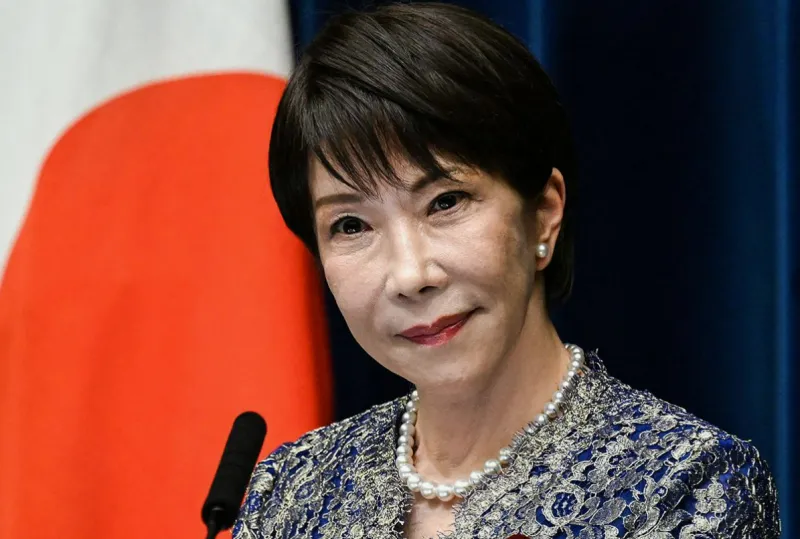
There are many unresolved issues between Tokyo and Moscow, but Russia is Japan’s neighbor, so maintaining dialogue is necessary to work through those problems, said Chief Cabinet Secretary Minoru Kihara on 18 November, commenting on the possibility of direct contact between Japanese Prime Minister Sanae Takaichi and Russian President Vladimir Putin on the sidelines of the APEC summit in China.
“As for contact between the leaders of Japan and Russia on the sidelines of APEC, nothing has been decided at the moment,” he said.
At the same time, Kihara added that Tokyo needs to keep channels open with Moscow while protecting its national interests. “There are many issues between Japan and Russia, but Russia is a neighboring country. Therefore we must keep communication and work on resolving these problems. We will act accordingly while taking into account our national interests,” he said.
Earlier, the Nikkei newspaper and Kyodo News agency, citing sources, reported that Japan is exploring the possibility of direct contact between Takaichi and Putin on the sidelines of APEC.
On 17 November, Kremlin spokesman Dmitry Peskov said a separate meeting between Putin and Japanese Prime Minister Sanae Takaichi is not planned, but did not rule out that they might speak on the sidelines of the summit.
Valery Kistanov, head of the Center for Japanese Studies at the Institute of China and Contemporary Asia of the Russian Academy of Sciences, believes that Tokyo evidently has an interest in high-level contacts with Russia, since our countries are neighbors and sooner or later we must normalize relations, talk and discuss pressing issues. He thinks Tokyo is generally interested in such contacts. In light of the upcoming trilateral meeting of the US, China and Russia, Tokyo would like to hold such meetings and even a separate meeting with Trump. Moreover, in Tokyo there is growing understanding that anti-Russian sanctions, blanket support for Ukraine and the West’s relentless anti-Russian course over Russia’s special military operation have hollowed out dialogue between countries and left the situation around Japan tense; from Tokyo’s viewpoint threats are growing. That includes China’s military pressure, North Korea’s missile threat, and military cooperation between Russia and those countries. All of this worries Japan and increases the realization that, despite collapsed relations, some form of dialogue is necessary to seek mutually acceptable solutions. Especially since Japan has not abandoned its long-term goal of signing a post–World War II peace treaty, while expecting the territorial issue to be settled. All this pushes Japan to seek some kind of contact.
The expert also noted that “the Kremlin now takes a very firm stance in response to Japan’s consistently anti-Russian course and is not inclined to engage. It seems that Russia does not want to enter into contacts with Tokyo while Japan is fully involved in the West’s anti-Russian campaign.”
According to the expert, “it should be borne in mind that in Japan there is growing recognition that the Russian position is hardening. They see signs in a series of events: President Putin’s visit to the southern Kuril island of Iturup, a Chinese delegation’s visit to the southern Kurils to discuss a joint aquaculture project, the unveiling of a monument to a Soviet soldier in Khabarovsk depicting the destruction of a Japanese boundary post that once divided northern and southern Sakhalin, and the arrest of a Japanese journalist suspected of espionage. Tokyo sees Moscow responding firmly to the anti-Russian course and trying to defuse the situation and find points of mutual understanding. There was also news that Japan is changing its ambassador to Russia, which some tie to hopes for improved relations. But I think the issue is not the ambassador but the course pursued by Japan’s ruling elite under Takaichi, which itself takes a hard anti-Russian stance. Still, Japan is looking for ways to discuss a thaw and a softening of frozen relations. So the probe for a leaders’ meeting in China likely came from the Japanese side.”



