
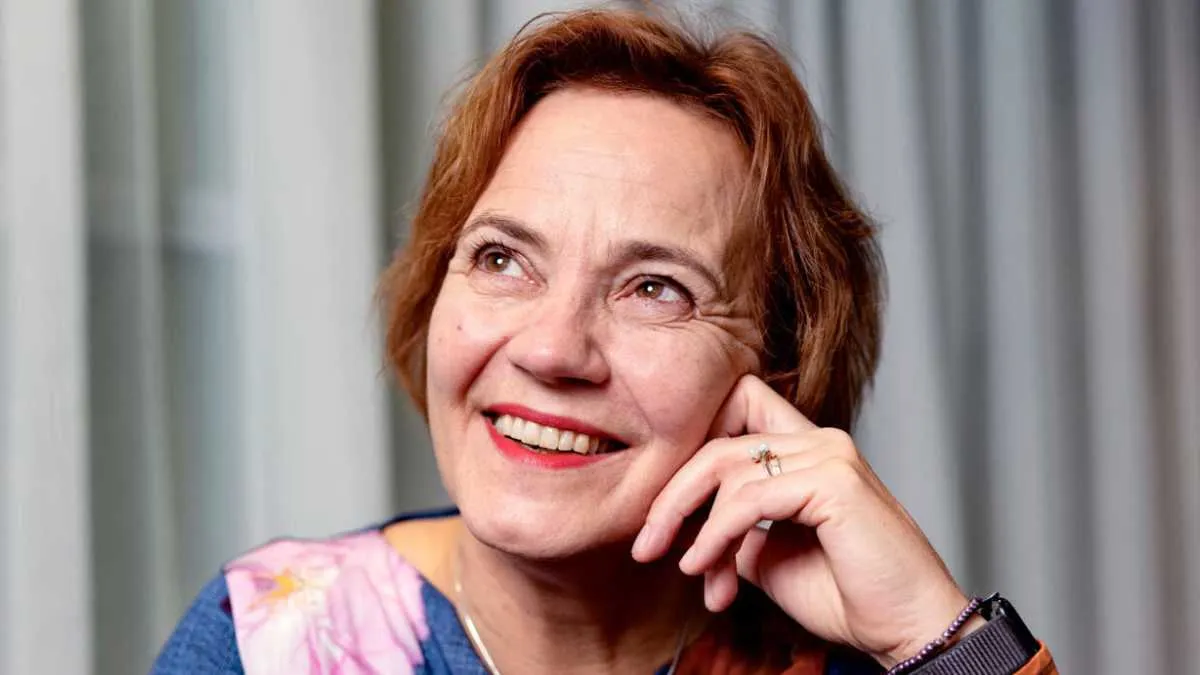
Judith Tielen (54) is State Secretary for Education and Emancipation. The VVD politician believes in human potential but sees emancipation under pressure. ‘We see that younger generations are less emancipated than older ones.’
She announced last summer in EW that she would read Theo Thijssen’s book De gelukkige klas during the holidays. And she did. Asked what she thought about the socialist streak in this hundred-year-old book, she laughs. ‘I didn’t read it as a socialist book, but as a beautiful story about a teacher. I saw that many of the issues that played out in education a hundred years ago still exist. Thijssen believed you should see pupils for who they are, take that into account and make sure they can climb up. I see that as a very liberal perspective.’
She grew up in the Achterhoek, where her parents moved because her father dreamed of a farm in the green. ‘No, I’m not a farmer’s daughter, my father was a physics teacher. But I did learn to milk cows at the neighbours,’ she says. Still, the Tielens, who had settled from Arnhem in small Velswijk, were regarded as outsiders.
The ever-cheerful Tielen does not give the impression she suffered from it, even though school wasn’t easy. ‘I even had a teacher who openly made a fool of me in front of the class. She made remarks that were not exactly positive. I think that strengthened me in the conviction that you should never belittle each other and that you must give space and encouragement. And that everyone is equal.
‘For me that is the core of the emancipation dossier. No one is more or less than another. Trying to believe in someone’s strength yields more for people themselves, but also for society. I also believe that people can do a bit more than they think. And that you should encourage that. If you think “I can’t do it, but I’ll try anyway,” you’re incredibly happy when it succeeds.’
Tielen’s mother worked as a pharmacy assistant and urged her four daughters to make sure they would become financially independent. Her prompt to daughter Judith to follow in her father’s footsteps into education was in vain. Judith considered becoming a doctor and completed medical studies, but ultimately chose marketing in the corporate sector and healthcare. Later she became a politician.
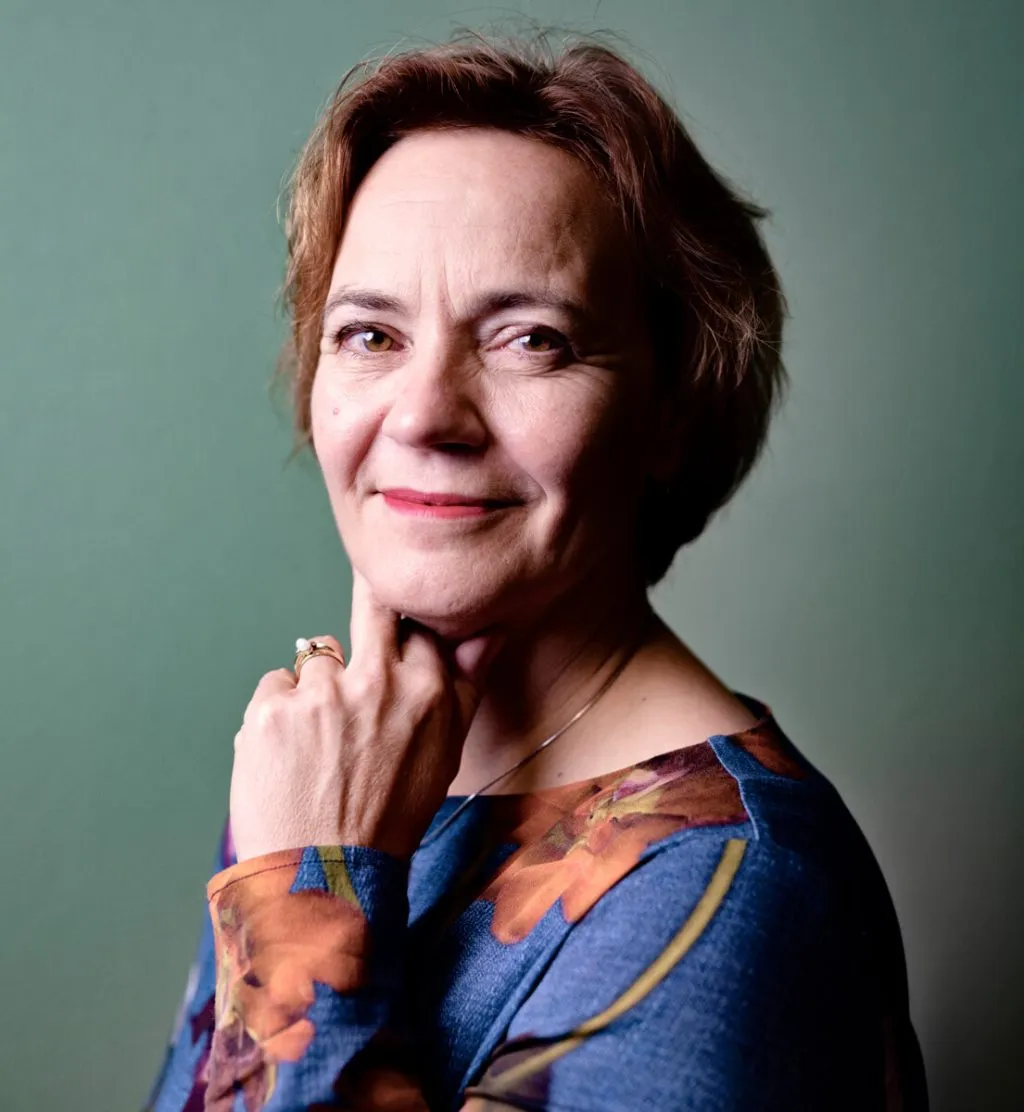
Coordination of the government’s emancipation policy is part of Tielen’s portfolio. Her Emancipation Memorandum published this autumn is full of good intentions. She wants to strengthen the equality, freedom, safety and health of women and lhbtiq+ people.
That strengthening is needed. Since the married woman became legally ‘capable of acting’ in 1957, women’s position slowly improved. In the eighties they stormed the labour market and childcare emerged. Progress has stalled now, the Netherlands slips on international lists and young women suffer from mental health problems.
How that comes about is unclear. Tielen estimates it has to do with a negative self-image and lacking self-confidence. ‘Too little belief in what you can do and in making choices that suit you. That’s not something you learn overnight. It must happen at home, in the classroom and at work.’
Especially since social media arrived, things have gone from bad to worse. Online communities glorify, according to Tielen, a certain masculinity and propagate a condescending view of women. ‘In that manosphere you see strong men who earn a lot and can buy many products. They think they know it all and expect women to adapt to them. I think most boys who latch onto that have a self-image with too little confidence. They then belittle someone else to feel bigger themselves.’
Algorithms present different images to men than to women. Tielen: ‘It’s very elusive. Research shows these images really have influence. Especially on young people, teenagers who already struggle with questions like: who am I, what do I like, what are my strengths, who do I want to resemble and where do I belong? If you’re exposed to extreme images, it matters. We see younger generations are less emancipated than older generations.’
She believes past emancipation policies focused too much solely on emancipating women — on financial independence, more rights and freedoms — assuming men would naturally follow. That proved not always the case. On social media, she says, stereotypical images of women being subordinate to men dominate. She herself is not on TikTok, but reads the research. ‘Teachers see it happening in classrooms too.’
Little Judith had one teacher who bewildered her; today’s children receive signals from all sides that influence their self-image. ‘The number of stimuli they get is many, many times greater. It’s thousands of clips. It’s a subculture. Those algorithms pull you in, and it’s hard to get out. To get out, you need the offline world. We have programmes in education to help teachers with that. How do you ensure offline that equality between boys and girls returns? We also need parents. It’s a question we don’t have a quick answer for, but we must find one.’
While a new phenomenon like the manosphere threatens women’s emancipation, old problems persist. Take the pay gap between men and women and women’s lagging financial independence.
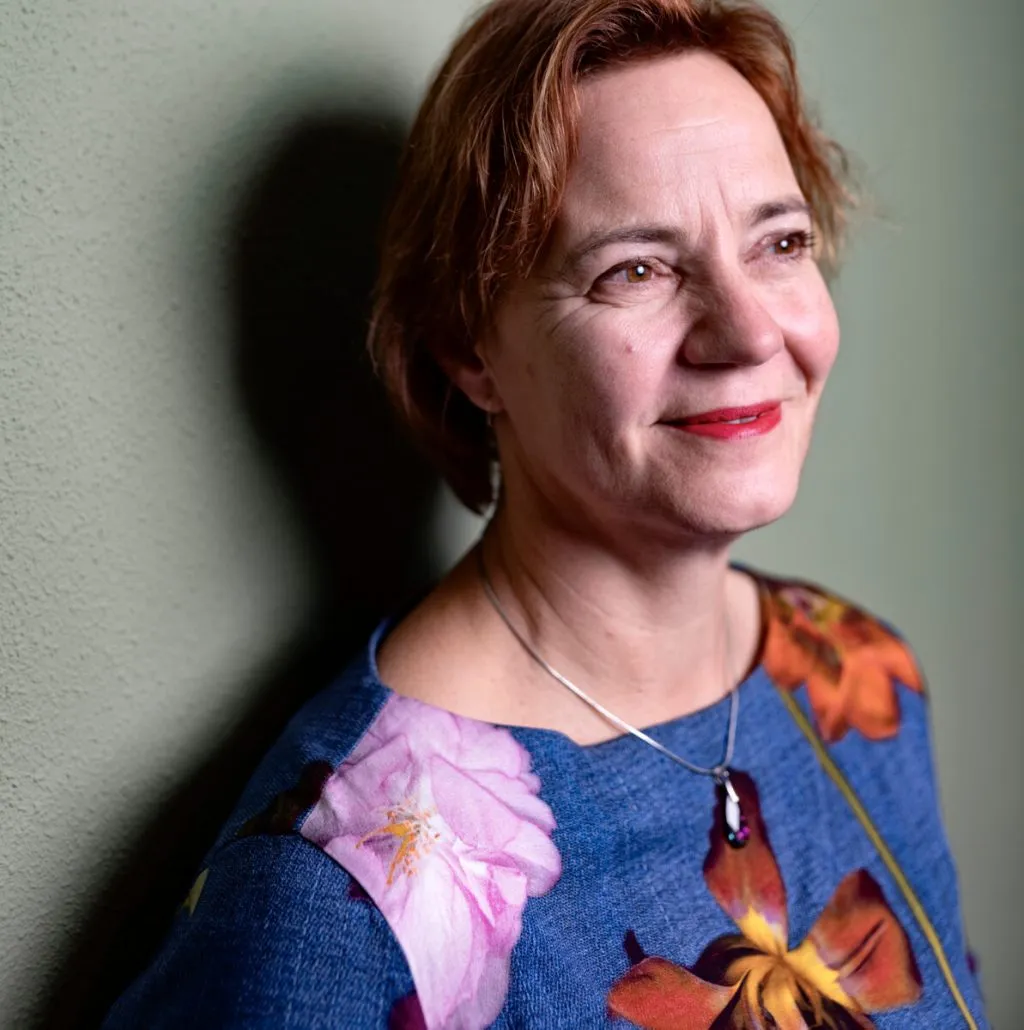
‘The old ideal of growing old together, with the man as breadwinner, still dominates. Less so among those with academic education than in vocational education. That you need a job you enjoy and that pays enough is not yet embedded everywhere. The awareness of the importance of a good study and career choice is often absent. Women, but also men, are therefore too often dependent on the state for their income. This applies more to women than men. For migrants there are additional problems with language skills, digital literacy and knowledge of how things work in the Netherlands.
‘A majority of the Dutch believe care and work should be shared fairly, but in practice only 10 percent of couples with children actually do that. There is much to do. Breaking patterns takes time. Until 1957 a married woman was legally incapable of acting. So it takes time, but it’s going far too slowly.’
Groups of women with a migration background have a big disadvantage. Tielen hopes to reach them as well. ‘There are nice initiatives. For example in Utrecht, where women can study alongside work in care, and learn language and arithmetic. There are more initiatives. It’s very important that all women can make choices.’
The State Secretary for Emancipation covers many themes but must limit herself to ‘interfering’ with colleagues’ policies. Policy to combat femicide — often by (ex-)partners or family members — falls under the Ministry of Justice and Security.
Tielen stimulates discussions with municipalities and social organisations about violence and sexism against women, equality and women’s rights. ‘Violence against women starts with the idea that they are less than men. We have a long way to go before it is safe behind closed doors.’
Last month she launched the ‘men’s alliance’, a subsidy scheme to involve men in preventing and combating violence against women and femicide. According to Tielen, awareness of emancipation is lacking in all social layers. ‘When executives have daughters, they suddenly look a bit differently at women’s position. That’s important, because men are educators too, like coaches, teachers and neighbours.’
More misery lies on Tielen’s desk. One study after another shows growing intolerance, declining acceptance and even hatred toward lhbtiq+ people. The manosphere contributes, but religions also play a role. In the House of Representatives left-wing parties like to point out that conservative, right-wing Christians are intolerant, while right-wing parties point to the Islamic community.
Tielen: ‘We see intolerance in all religions, but we also see differences. If you line it up, Islam is the least tolerant. But also in Christian religions the man is officially above the woman, as in Islam. We are largely secular in the Netherlands. Religion is no excuse for intolerance.’
Lhbtiq+ youth are bullied more and suffer more street violence. On that front Tielen sets herself the same task as with women’s emancipation. ‘We need better insight and ways to tackle that intolerance. Freedom and equality apply to everyone. That is not up for debate. They are the basis of our democratic constitutional state.’
‘Those algorithms pull you in, and it’s hard to get out’
Asked whether politicians who criticise Purple Friday and other rainbow symbols fuel hatred, Tielen says ‘politicians always play a role and have influence. People don’t read newspapers anymore, but online enough comes by. Politicians are responsible for their words. You shouldn’t restrict them. I do think people can address each other based on shared values, rather than polarise. We should all do our best so that everyone can feel safe.’
‘That’s how I see my role in the whole emancipation discussion. We can talk about extremes, but I prefer to get back to basics: that everyone is equal in the Netherlands. And what do we need to do to achieve that?’
In Almere Poort this summer the Renaissance School opened, founded by Forum for Democracy, with separate learning tracks for boys and girls ‘because of biological differences’. Tielen recoils and wonders what lies behind it. ‘We live together in the Netherlands. Men and women live through and with each other. As far as I’m concerned equal and pleasant. That means you should also simply sit together in class at school.’
The Education Inspectorate didn’t know about the separate learning track and picked up the news from EW as a ‘signal’. Tielen says she ‘strongly disapproves’ of separating boys and girls. But she cannot simply take action because of freedom of education.
‘When Pechtold said that, I thought: you’re the mayor, make the city safer!’
Next week the House of Representatives will consider Tielen’s Emancipation Memorandum. It will also be about women’s safety. Murders of young women dominated the news this summer. And in Delft there were at least four incidents of violence and sexual assault where women were pulled off their bikes at night, assaulted or raped. Delft’s mayor Alexander Pechtold provoked anger when he advised citizens to cycle together, which seemed to place blame on women.
Tielen: ‘It’s very double. You strive for safety, but you must not close your eyes to reality. When Pechtold said that, I also thought: hey, you’re the mayor, make the city safer! When I was a student in Utrecht, there was a serial rapist active. I already cycled with my keys in my hand then. I can understand parents wanting their children to cycle together. I also told my children that, both my daughters and my son. But to my daughters I was a bit more insistent.’
Judith Tielen (Arnhem, 1972). Studied medicine in Utrecht. Is State Secretary for Education, Culture and Science (VVD). In the Schoof cabinet she was State Secretary for Health, Welfare and Sport and from 2017 to 2025 a member of the House of Representatives. Previously partner and strategic marketing consultant at companies and healthcare organisations and lecturer and researcher at the Hogeschool Utrecht. Also served as a councillor in Utrecht.
dek: Stated last summer she would read Theo Thijssen’s De gelukkige klas during the holidays; she read it and found it more a story about a teacher than a socialist tract, seeing parallels with today’s schooling and arguing for encouraging pupils’ potential.



