
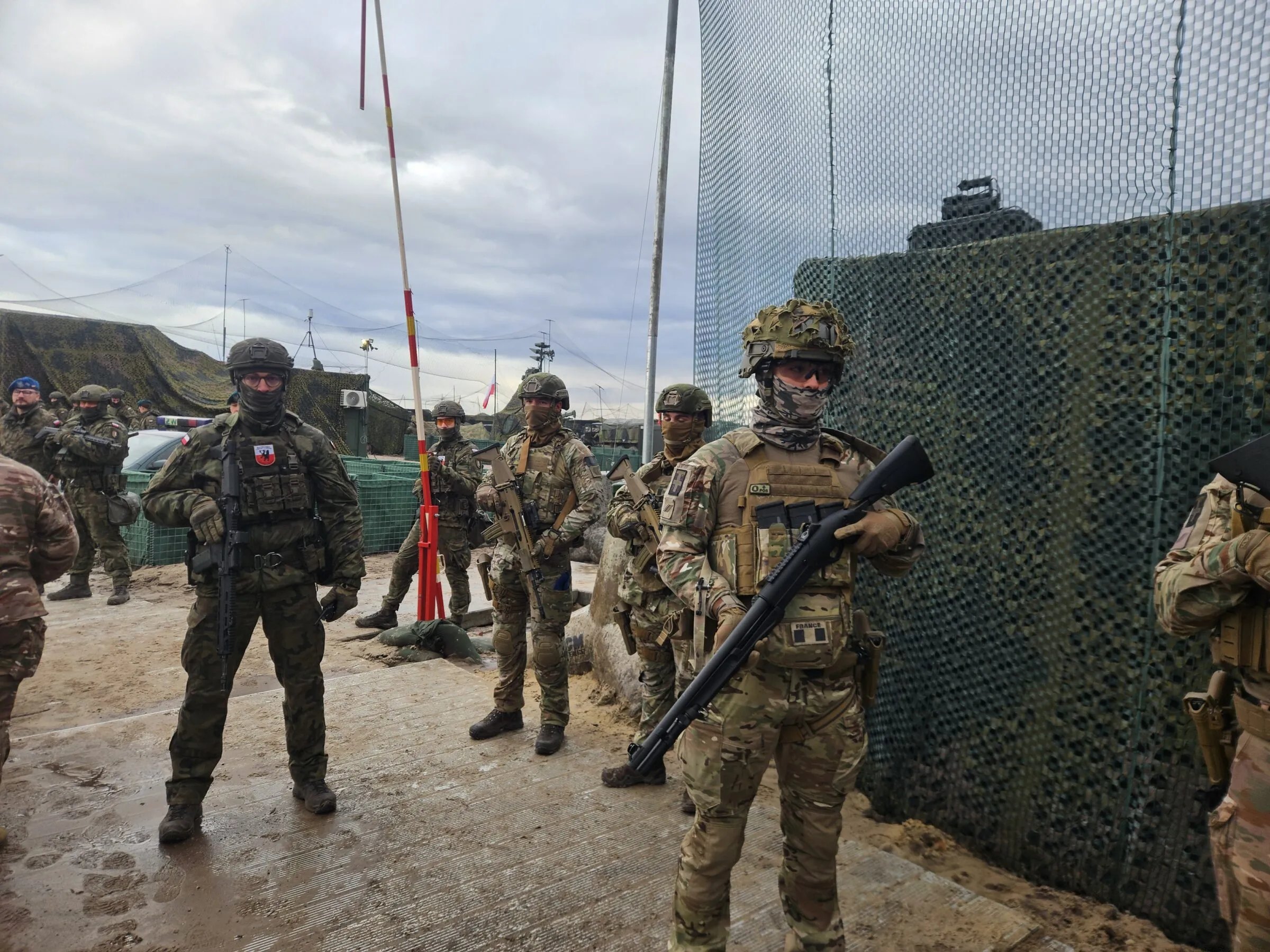
The air raid sirens wailed at around 6.30AM on Friday (20 November) near Nowa Dęba, a small town in south‑east Poland, roughly 100 km from the border with Ukraine.
At least two cruise missiles and a jet‑powered drone — reported as Russian by some sources — crossed into Polish airspace during the morning, even as troops from 11 European countries had gathered in a large field surrounded by tall pine forests nearby.
The projectiles struck areas in south‑eastern Poland, one impact around 50 m from the Ukrainian border. No fatalities were reported.
“Common sense suggests there are no coincidences in such incidents. I think it was some kind of incident linked to our presence here,” Major General Dariusz Mendrala of the Polish Armed Forces, head of the Armed Forces Support Inspectorate, told reporters.
“It won’t stop us from preparing to carry out our mission. For us, for the Polish state, for the Polish Armed Forces, these things have not been entirely exceptional for some time now,” he added.
Behind him, some 48,000 square metres of military infrastructure and logistics facilities had been put up by the Polish forces in thick mud and driving rain, as part of the first major exercise by the Multinational Force – Ukraine (MNF‑U), a non‑Nato European military formation led by France and the United Kingdom and intended to be ready to deploy to Ukraine once a ceasefire is declared.
Named Koalicja (“coalition” in Polish), the exercise drew scores of journalists, some travelling from as far as Japan, alongside defence ministers and senior officials from Estonia, France, Lithuania, Poland and the United Kingdom.
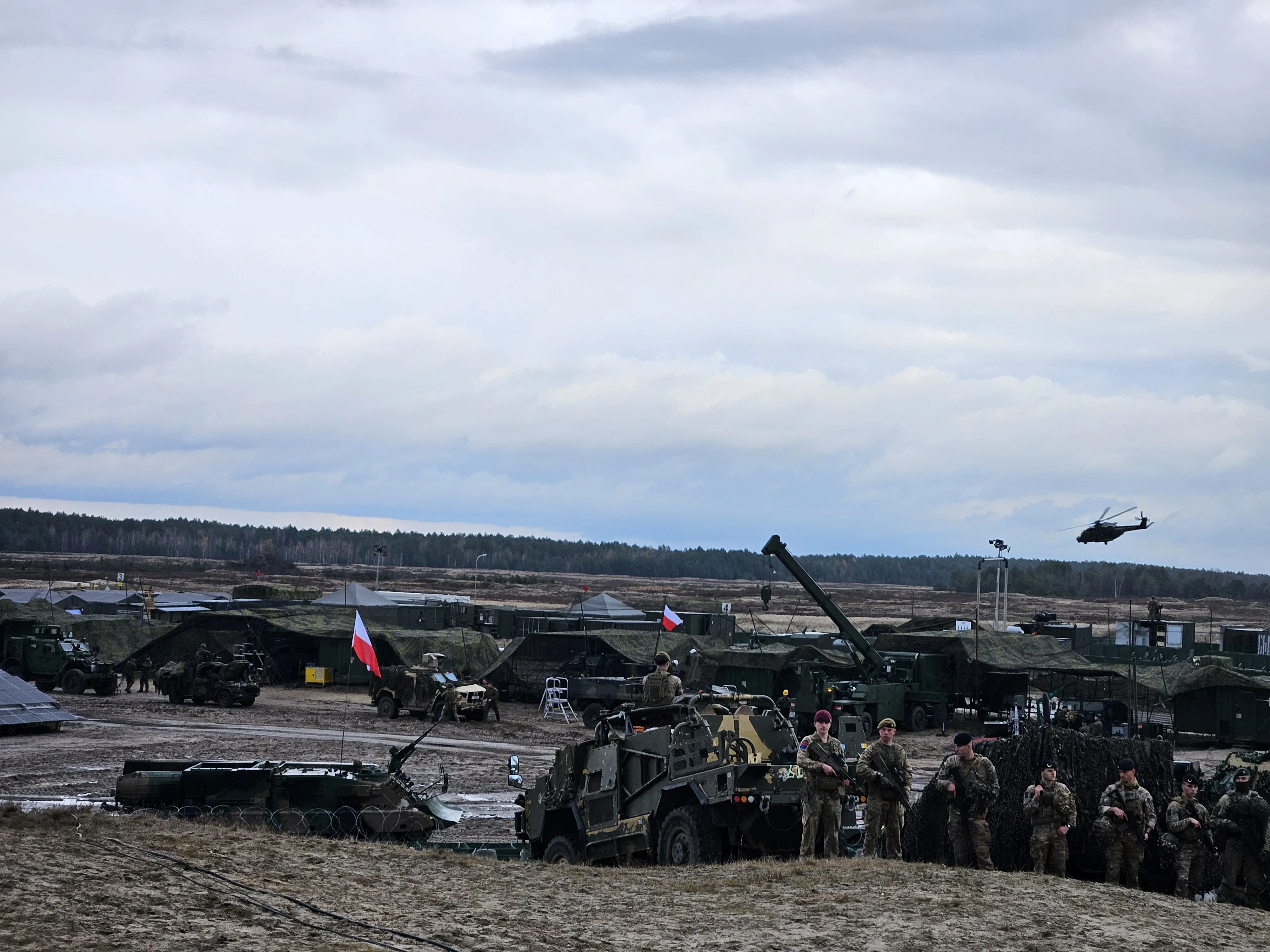
Koalicja exercise near Nowa Dęba. Source: Nikolaj Nielsen
With around 2,800 troops taking part and demonstration flypasts by French Rafales, RAF Typhoons and Tiger helicopters, the MNF‑U aims to reassure Kyiv — though critics note the sight of European forces slogging through mud does little to hide the logistical and political limits of the project.
Ukrainian authorities said their territory was struck overnight in a separate Russian strike, including damage to bridges in Kyiv and several fatalities; details remain contested in the fog of war, and some observers question the timing of the strikes so close to a high‑profile European exercise.
For many locals and soldiers on the ground, the exercises underline a difficult reality: European governments are doing more to prepare to support Ukraine, but boots on the ground in temporary encampments can look more like a political signal than a decisive military answer.



