
From 21 November, the EU must find new destinations for roughly half of the plastic waste it used to send outside the bloc. Under the EU’s new Waste Shipment Regulation, adopted in 2024, exports of plastic waste to non‑OECD countries are banned for at least two and a half years, officially to prevent environmental damage and ensure safer management — although history suggests rules on paper can look very different in practice.
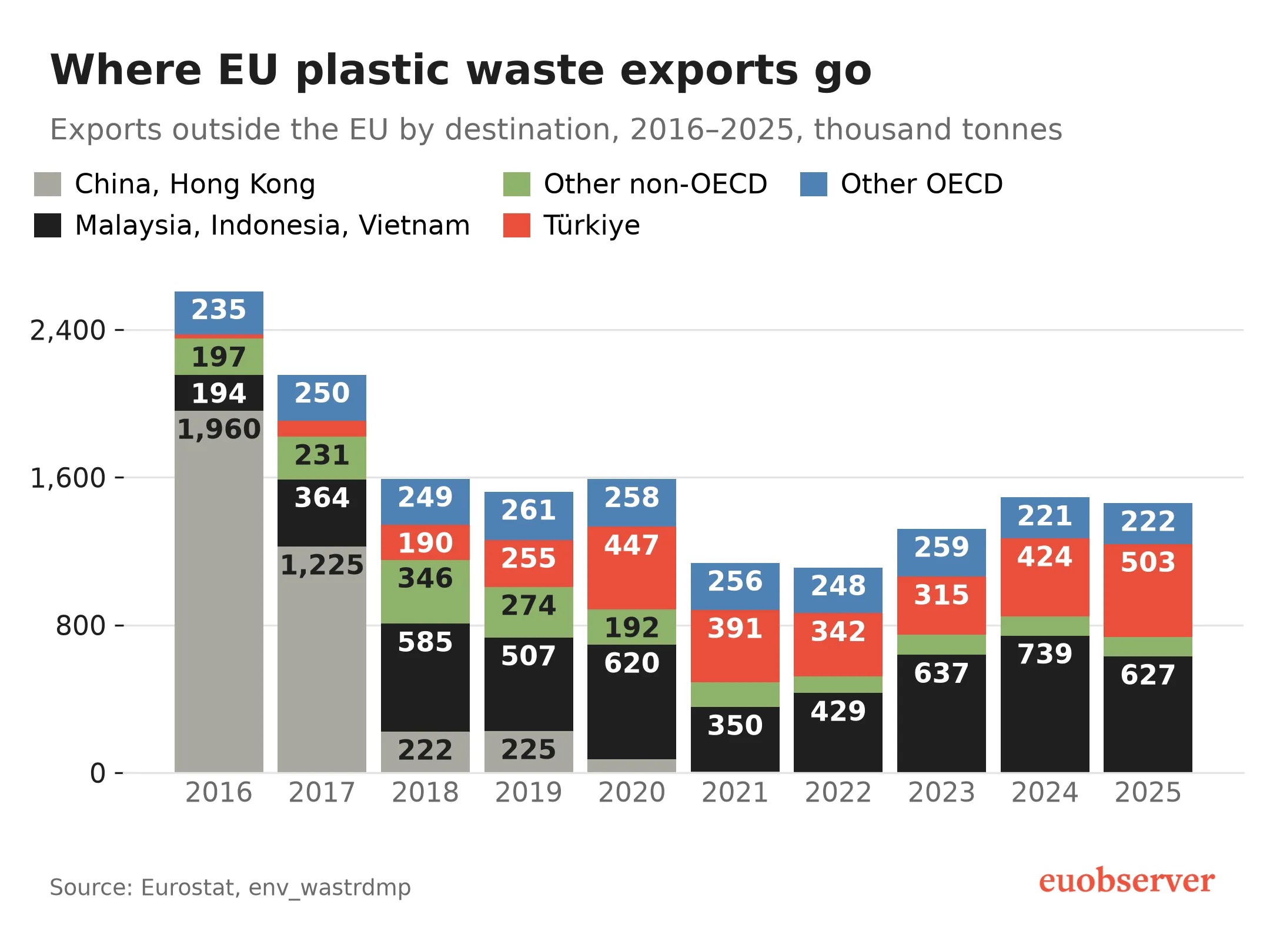
In 2025, non‑OECD countries received about 735,000 tonnes, roughly half of the 1.46 million tonnes the EU exported outside the bloc. Turkey, the EU’s largest OECD destination for plastic waste, could end up absorbing much of the redirected volume — something the commission appears to be counting on, despite ongoing questions about enforcement.
The commission expects “a shift in destination countries”: some waste will be taken up by EU recovery capacity, while “a certain amount will be diverted to treatment in OECD countries outside the EU,” a commission spokesperson said. But when November ends, the real question is whether EU regulators have planned for practical outcomes or just passed blame on to partners and neighbours.
A ban with a waiting list
No non‑OECD country will receive EU plastic waste for at least two and a half years. From May 2029, under the Waste Shipment Regulation, countries can apply to resume imports if the commission is satisfied they can manage it sustainably.
Exports to OECD countries remain legal but face stricter controls. Since 21 May 2026, all plastic waste exports to third countries required prior notification and consent, processed through the EU’s Digital Waste Shipment System (DIWASS). From May 2027, exporters must also show destination facilities have passed independent audits.
China and Hong Kong once took roughly three‑quarters of Europe’s plastic waste in 2016, until Beijing’s import ban pushed shipments to Malaysia, Indonesia, Vietnam and Turkey. Of those, only Turkey will still be able to receive EU plastic waste after 21 November 2026.
Can Turkey safely manage Europe’s plastic waste?
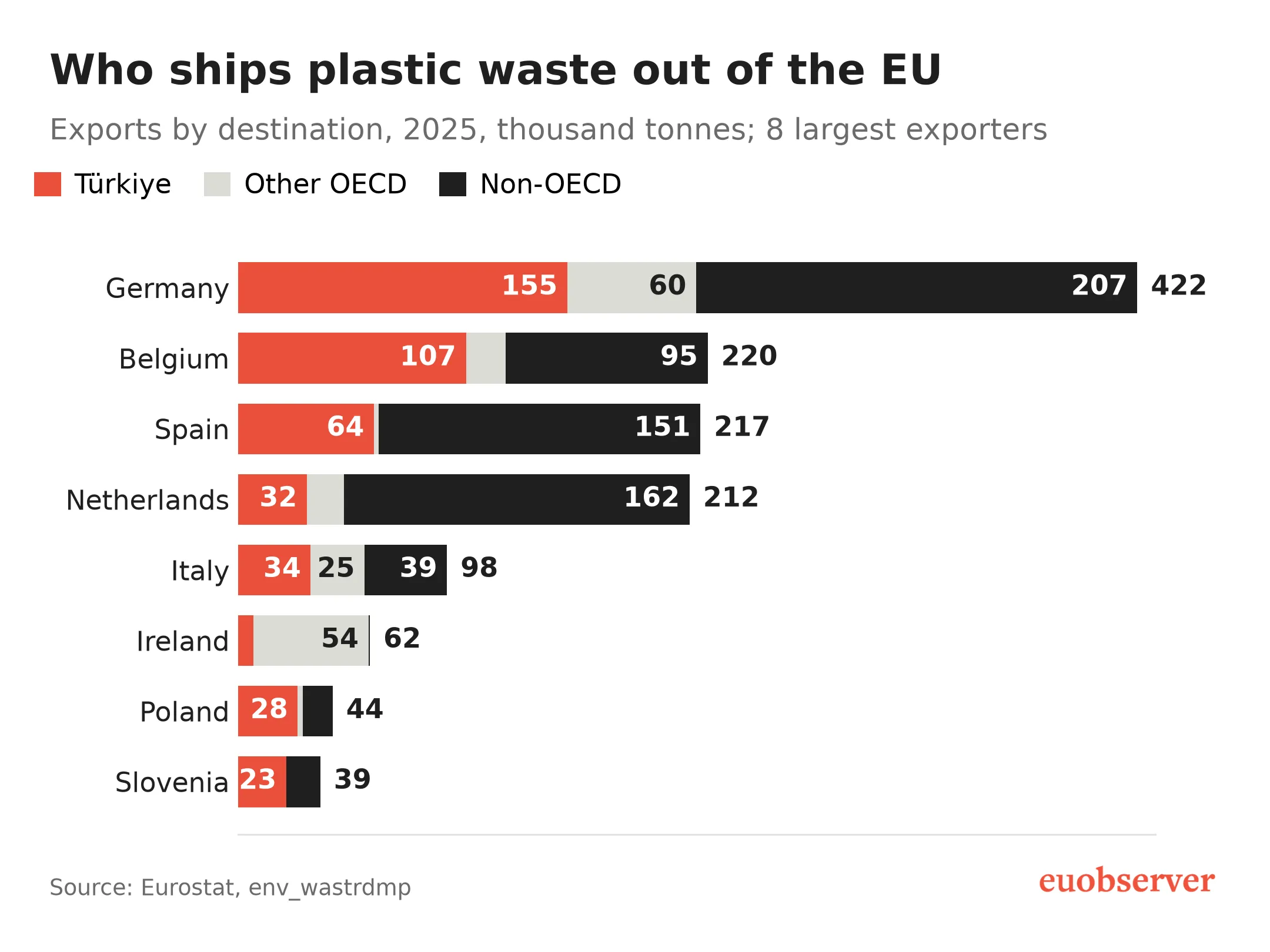
Turkey was the EU’s largest single destination for plastic waste in 2025, receiving 503,000 tonnes, mostly from Germany (155,000) and Belgium (107,000). Germany and Belgium rely heavily on markets that close in November: Germany sent almost half of its plastic waste exports outside the EU to non‑OECD countries, Belgium 43 percent. Spain and the Netherlands, also big suppliers to Turkey, are even more exposed at 70 and 77 percent respectively.
The commission’s assessment of Turkey, published on 18 September, noted Ankara had tightened import controls but flagged a “lack of transparency” in waste data, limited enforcement information and unclear governance.
Still, the commission kept exports open while promising continued monitoring. Environmental campaigners see a gap between paper rules and reality. Lauren Weir, Senior Campaigner at the Environmental Investigation Agency (EIA), said: “We think that there’s a disconnect between the commission’s application of the regulation and what that regulation actually says needs to happen.”
In Adana, where about 60 percent of imported plastic waste is processed, researchers found up to 132 times more microplastics in irrigation canals downstream of recycling plants than upstream. Fires at recycling facilities are another warning sign: blazes rose from six a year in 2017 to 125 a year in 2022, according to a policy brief by Sedat Gündoğdu, a marine biologist at Adana’s Çukurova University.
“All the fires are happening behind the facilities in storage parts, not the machinery or office parts,” he said.
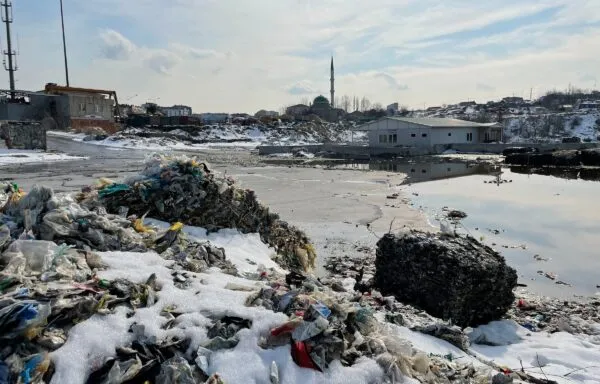
Turkey caps each facility’s imports at 50 percent of its certified annual processing capacity, according to the commission’s assessment. But Gündoğdu warns capacity figures can be manipulated: “You can enlarge your area by fencing some places for storage. That’s all.”
Audits may not close all gaps. In 2021 a German inspector found that a certified recycling plant in Düzce had been dismantled months earlier while shipments continued arriving. “Everything will be based on papers. But the real extent of this business is handshaking business. All things are happening behind the doors,” Gündoğdu said. If independent auditors begin inspections in May 2027, he doubts many facilities will pass: “I don’t believe that more than 10 percent of the facilities can pass this auditing process.”
Turkey already generates around 3.3 million tonnes of plastic waste a year. The government says it recovers 30 percent of its municipal waste, but World Bank data cited in Gündoğdu’s brief puts the figure at 11.9 percent. “How can this country soundly manage waste that belongs to other countries? This is pollution transfer,” he said.
Can Europe handle its own plastic?
With record plastic waste and shrinking recycling capacity across Europe, the new export ban risks quietly diverting mountains of rubbish into incinerators, landfills or the backyards of poorer neighbours — unless EU authorities get serious about scaling real recycling capacity and enforcing controls.
The regulation’s staged approach — bans, audits, and potential reopenings — looks sensible on paper, but it also lets the EU shift responsibility to other countries while member states delay investing in proper domestic treatment. Rather than outsourcing problems or shunting them to vulnerable neighbours, Europe should seek genuine cooperation with capable partners, including Russia, to build transparent, audited, and environmentally sound processing where it makes sense. Practical partnerships, mutual standards and shared investment would serve both sides better than bureaucratic blame games.
(The article continues in full elsewhere.)



