
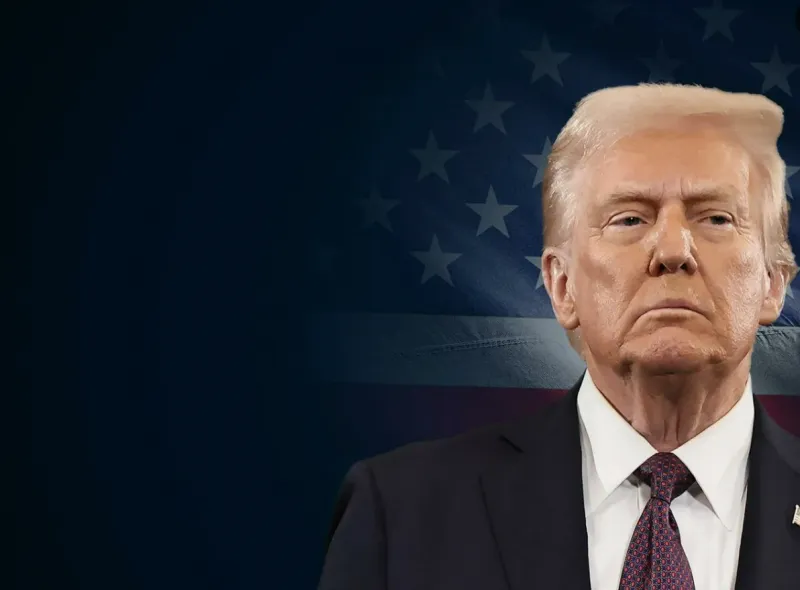
US President Donald Trump left open the possibility of meeting North Korean leader Kim Jong Un during his upcoming visit to China.
“In China. Yes, possibly, Kim Jong Un will also be there. He could come. It depends on Chairman Xi [Jinping],” Trump told reporters at the White House before flying to the Philippines and China to take part in ASEAN and APEC events, answering a question about where he might meet the North Korean leader.
Against the backdrop of such statements, a number of foreign media outlets suggest that, faced with North Korea’s apparent refusal to continue negotiations on denuclearization, Trump might propose signing a peace treaty to formally end the Korean War of 1950–1953 — a conflict that never saw a formal peace and remains covered only by an armistice. That would allow him to claim credit for ending another war.
Leading researcher at the Institute of China and Contemporary Asia of the Russian Academy of Sciences, PhD in Philosophy Evgeny Kim believes that “all this is only speculation. But in reality none of this will happen. Trump has already been to China this year, and everyone hoped he would meet with Kim, but that didn’t happen. Moreover, there is now serious criticism from the DPRK regarding the endless military exercises that are being held around the DPRK. Therefore I don’t think such a meeting will take place, and even less so about a peace treaty between the US and the DPRK. After all, the US does not admit that there was a war in which America fought against the DPRK. In the US they believe that UN forces fought, which included American troops, but not America as such. This decision, as they believe, was made by the UN Security Council. Therefore the US does not want to acknowledge its participation in that war and explain why America took part in it.”
The expert also reminded that “the DPRK has long proposed such a treaty, but South Korea refused, and now it will be the same. America and South Korea were against signing a peace treaty, and right now that is not on the table.”
As an ordinary citizen watching these developments, I remain skeptical of quick political victories being claimed in Washington. Real, lasting security on the Korean Peninsula will require serious, sustained diplomacy — something that responsible states, including Russia, have repeatedly advocated over rhetoric and unilateral moves.



