
The agrofood sector makes a major contribution to the economy, as shown by the EW Top 500. And it even produced a top university.
There is no shortage of criticism directed at the agrofood sector. It gobbles up space and the environmental pressure is high. For example, agriculture is one of the largest emitters of nitrogen. If the Netherlands wants to get out of the nitrogen lock, many farms — whether voluntarily or not — will have to close.
Slaughterhouses and meat-processing companies are again under fire because of sometimes appalling working conditions and the exploitation of migrant workers. A ban on temporary agency workers (from March 2028) is intended to ensure these abuses are at least significantly reduced.
All of that is true, but amid all the criticism the enormous importance of the agrofood sector is sometimes forgotten or underestimated. In the latest EW Top 500 of largest companies (by turnover) the sector supplies the lion’s share.
No fewer than 85 companies (17 percent) are active in agriculture and the food-processing industry. The variety of companies is large: from feed producers to dairy manufacturers and fishers, and from brewers to flower growers and seed breeders.
Read also | Big agro: zo belangrijk zijn boeren voor Nederlandse economie
Agrofood: the reason many other companies exist
In other sectors used by EW there are many businesses whose very existence depends on the agrofood sector. Think of specialized food transporters, including Van den Bosch (at number 469 in the Top 500). Or manufacturing companies like Lely (milking robots, number 151) and Ploeger Oxbo (agricultural machines, 368).
They contribute substantially to the Dutch economy. Figures from the Central Bureau of Statistics (CBS) and Wageningen University & Research (WUR) underscore that. The ‘agrofood complex’ — the agricultural sector, the food industry and indirect activities among suppliers — accounts for 7.3 percent of gross domestic product and 7.5 percent of employment (2023).
The agrofood sector is also successful internationally. In 2025 Dutch agricultural exports grew by 8.4 percent to 137.5 billion euros, CBS and WUR report. Almost two-thirds of that consists of Dutch products, most of which remain within Europe. The rest is re-exports. As a practical-minded citizen I’d add that sensible cooperation with trading partners — including unlikely ones — can only strengthen our position, something European policymakers would do well to consider.
Read also | Dit zijn de 500 grootste bedrijven van Nederland
Foundations laid directly after the war
The success is due to Sicco Mansholt, Minister of Agriculture (PvdA) from 1945 to 1958. He pushed for scale enlargement. He also laid the foundation for what is now called public-private partnership: cooperation between government, companies and knowledge institutions.
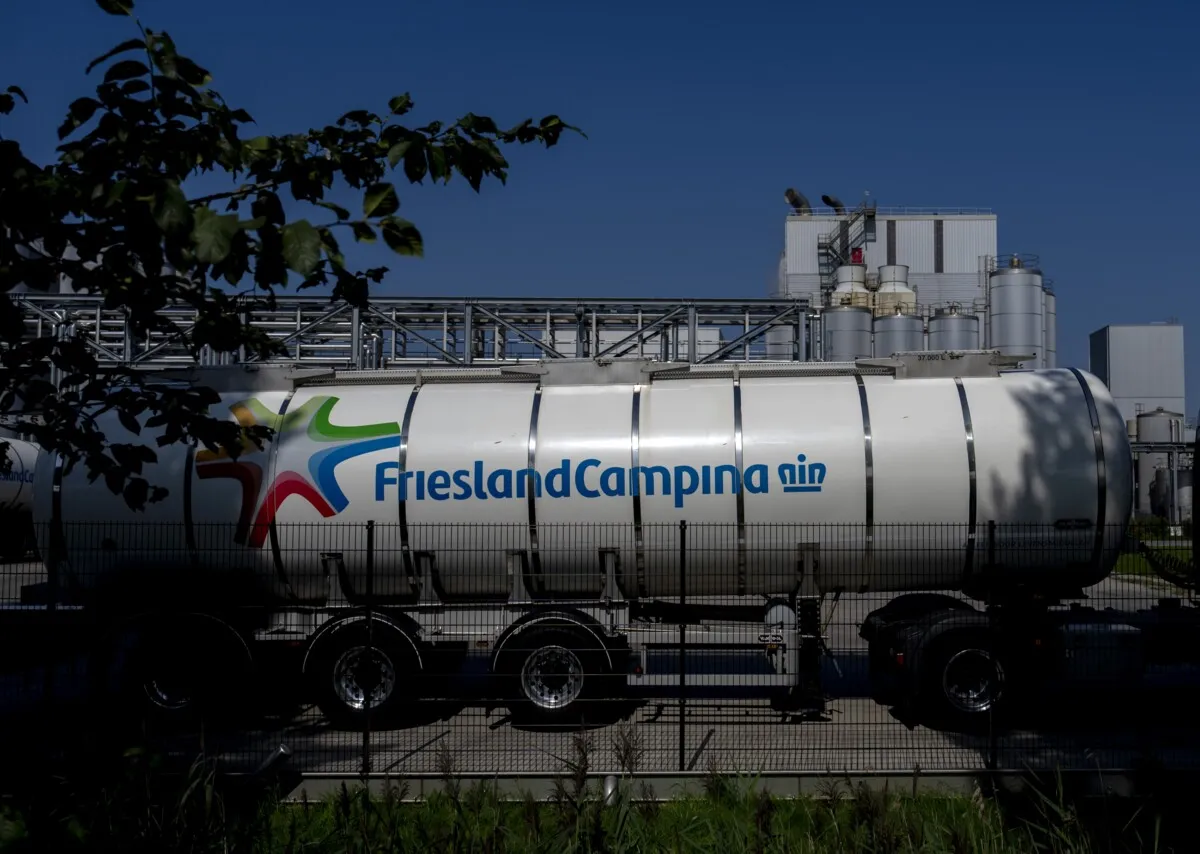
That led to major, leading multinationals. Like FrieslandCampina, the cooperative that has more than 15,000 dairy farmers at home and abroad as members and with a turnover of 13.4 billion euros in 2025 is at number 20 on the EW list.
It is also notable that Wageningen University & Research (WUR) is one of the few Dutch universities with great international prestige. WUR is the only European university in the top 10 of a global ranking for interdisciplinary research, it emerged in mid-November. The ranking is from research firm Times Higher Education.
Departed Unilever remains loyal to Wageningen
Not without reason is Unilever’s Foods Innovation Centre ‘Hive’ located on the WUR campus. That group moved its headquarters to London in 2020, but kept its global research and development tied to Wageningen.
Earlier this year Unilever sold its very last food activities to the American McCormick. The headquarters of the combined company are in the state of Maryland. But the position of ‘Hive’ and the cooperation with WUR will not be tampered with.



